Reflective transfer printing: When a print catches light after dark

Bring your brand to life
Explore over 1,000 customisable products designed to showcase your brand and leave a good impression.
The hard part isn't making it reflective
Most people assume the hard part of a reflective print is making it reflective. It isn't. Glass beads and prisms do that on their own: they bounce light straight back to its source, no help from us required. The hard part is making the film survive a heat press without lifting at the edge, then repeated washing without lifting the rest.
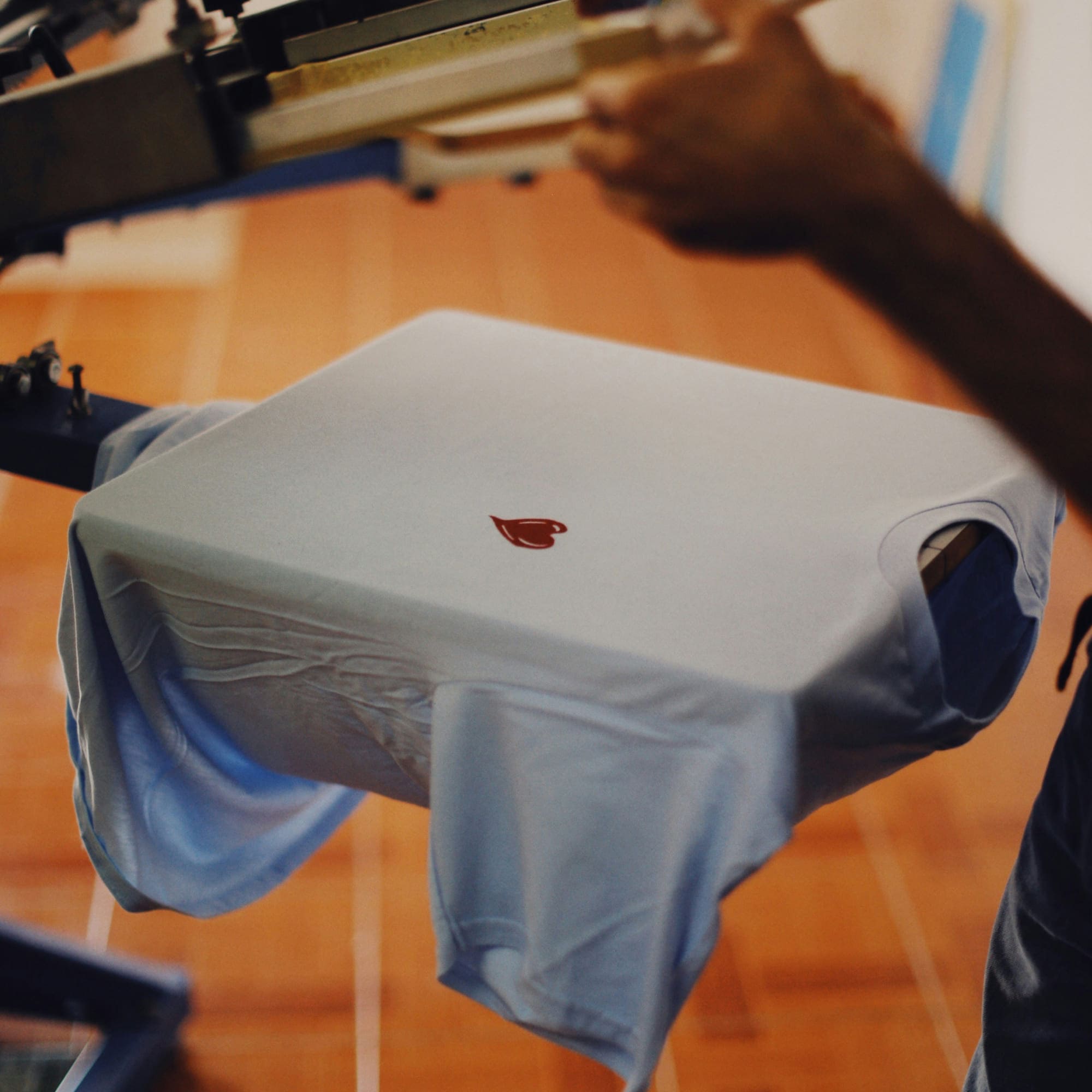
A reflective transfer starts as a sheet of film, not as a print on a garment. We cut or print the design onto that film first. Only once the shape is right does it go anywhere near the fabric.
What makes it reflective
The film carries the effect, not the ink. Embedded in it, or coated onto it, are microscopic glass beads or prismatic elements. Light hits them and bounces back toward where it came from, rather than scattering the way most surfaces do. That is retroreflection. It is why a logo that reads flat grey in daylight lights up white under a car's headlights at night.
Bonding it to the garment is a heat press job: the heat activates the adhesive backing, and the film sets into the fabric rather than sitting on top of it. Get the temperature or the pressure wrong and it sits on top anyway. That is where peeling starts, usually at the corners first.
Where it earns its place
High-vis jackets, construction gear, anything worn where being seen at six in the evening in November is a safety requirement and not a preference. Running and cycling apparel, for the same reason, worn by choice rather than regulation.
We also put it on caps, bags, and outdoor jackets for brands built around activity or an urban outdoor identity. There the reflective element is decoration first and safety second. We won't put it on a shirt destined for a drawer. If a garment is never going to see night air, reflective film is money spent on something nobody outside a photograph will notice.
What it costs to get wrong
Colour is the first limit. Reflective film reflects best in silver and grey, because the effect needs a neutral, uncoated surface to bounce light cleanly. Coloured reflective film exists. It reflects less. A client asking for their brand blue to light up at night is asking the material for something it does not fully deliver, and we say so before the order is placed, not after delivery.
Fine detail is the second limit. A logo that cuts cleanly as a bold shape can turn to confetti as a thin script signature. We test the cut on a sample sheet before we commit the full run.
Choosing it
Reflective transfer is the right call for workwear, safety garments, outdoor apparel, and sportswear where visibility in low light is part of the brief. It also works as a design feature for brands after a distinctive, high-impact finish on a jacket, bag, or cap. For decoration with no visibility requirement behind it, another transfer method will give more colour to work with.
Film, heat, colour, detail. That is our corner of the business. And the question underneath it: whether a reflective mark is there to be seen, or just there to be photographed.
About the author

Junior Softshell Sports Tech Neck Warmer

Nike Dri-FIT Club Cap Custom


Stedman Lux Polo Men