Thermotransfer: Printed once, applied when the order comes in

Bring your brand to life
Explore over 1,000 customisable products designed to showcase your brand and leave a good impression.
Most people assume the hard part of thermotransfer is the design. It isn't. The artwork gets printed once, in one place, days or weeks before anyone needs it. The hard part comes later: fixing that design correctly onto a fabric nobody in the print room has seen yet, to a schedule set by someone else entirely.
That gap between printing and applying is the whole point of the method, and the reason we reach for it. We print a batch of transfers in advance. We apply them as the order actually needs them: one name today, forty numbers next week, the wrong size fixed in an afternoon.
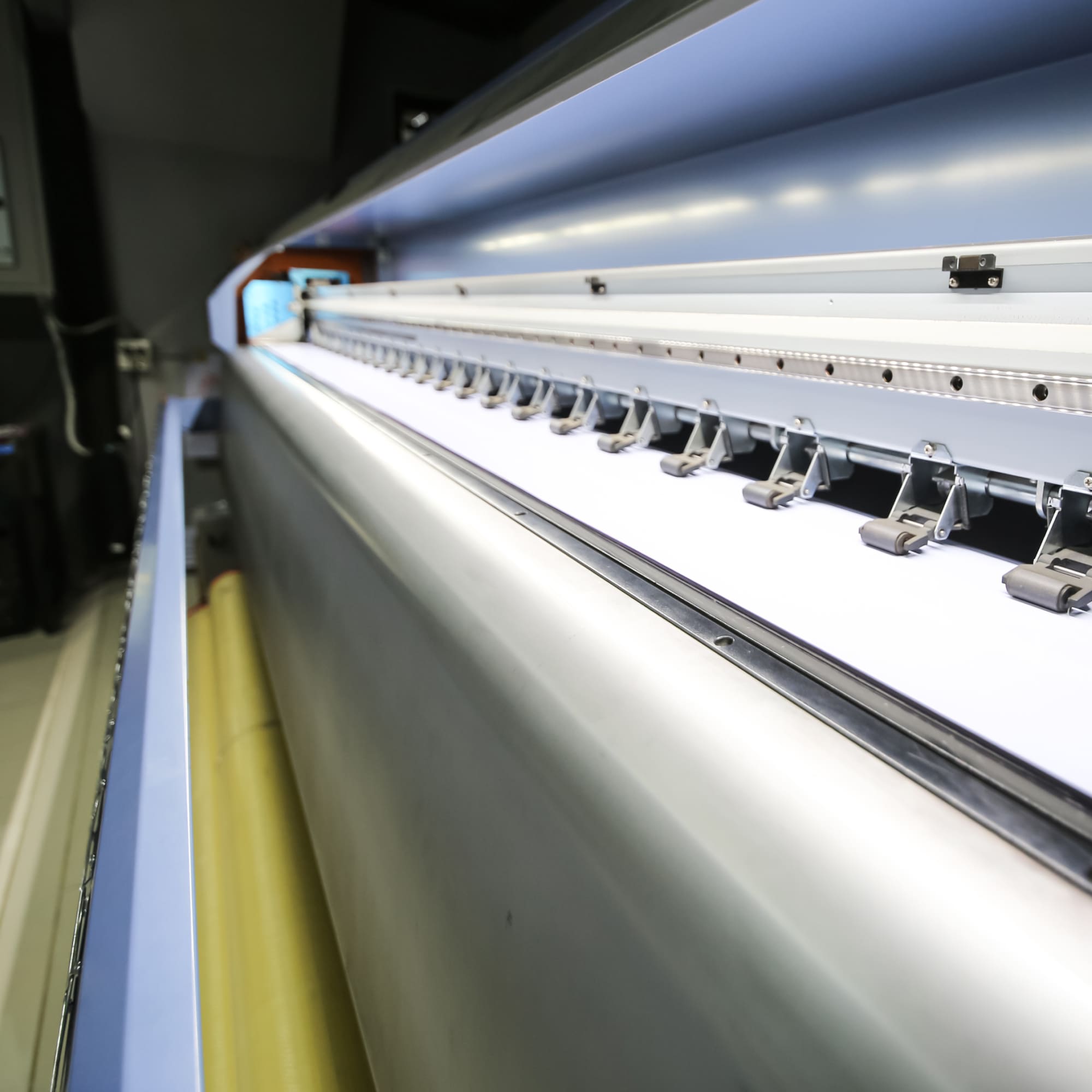
Making the transfer
The design goes onto a transfer film or paper first, using digital or screen printing depending on the finish the client wants. Vinyl based transfers hold their shape and last; soft transfers are built to disappear into the fabric rather than sit on top of it. We pick the type before we pick the press settings, because getting this step wrong shows up two washes later, not on the day of delivery.
The heat press
The film goes face down on the garment. Heat and pressure, held for a set time, release the design from its carrier and bond it to the fabric underneath. Peel it too soon, or run the press a few degrees off, and the design lifts at the edges within a month. There is no correcting that after the fact. Peeling the carrier is either immediate, while it is still warm, or after it cools, and the wrong choice for a given transfer type is one of the more common mistakes in the trade.
Where we use it
Thermotransfer works on t-shirts, hoodies, caps, bags, and most textile products a client brings us. It earns its place on team kits, where forty players need forty different names and numbers on the same order, and on event merchandise, where the design is fixed but the sizes and quantities are not, until close to the date. Anything that needs personalising inside a larger order is a natural fit.
What it costs to get wrong
Thermotransfer leaves a layer on the fabric, more with some transfer types than others, and on anything worn against the skin that layer is noticeable. Choose the wrong material for the fabric, or skip calibrating the heat press for it, and the print cracks or peels with repeated washing. None of this shows on day one. It shows up in the third month, in a returned garment, and by then the order has already shipped.
When we choose something else instead
For a single uniform run in the thousands, screen printing or sublimation will usually beat thermotransfer on cost and on finish, and we say so even when the client has already asked for the other method. Thermotransfer earns its cost on personalisation and on flexibility, not on volume. Matching the method to what the order actually needs, not to habit, is the harder conversation to have before printing starts, not after.
Film, heat, peel, timing. That is our corner of the business. And the question underneath it: not what the design looks like the day it is printed, but whether it still looks like that after the fortieth wash.
About the author

Blaze Ellips
MultiTouch
EasyCharge Extended - X-Smart