UV printing: Sharp graphics that dry the moment they're printed
Bring your brand to life
Explore over 1,000 customisable products designed to showcase your brand and leave a good impression.
The ink is not the hard part
Ask someone what makes a print technique difficult and they will usually point at the design: the logo, the colours, getting the artwork right. With UV printing that is the easy part. The actual difficulty is what happens in the fraction of a second after the ink lands, because it does not dry the way other inks do. It cures.
What curing on contact means
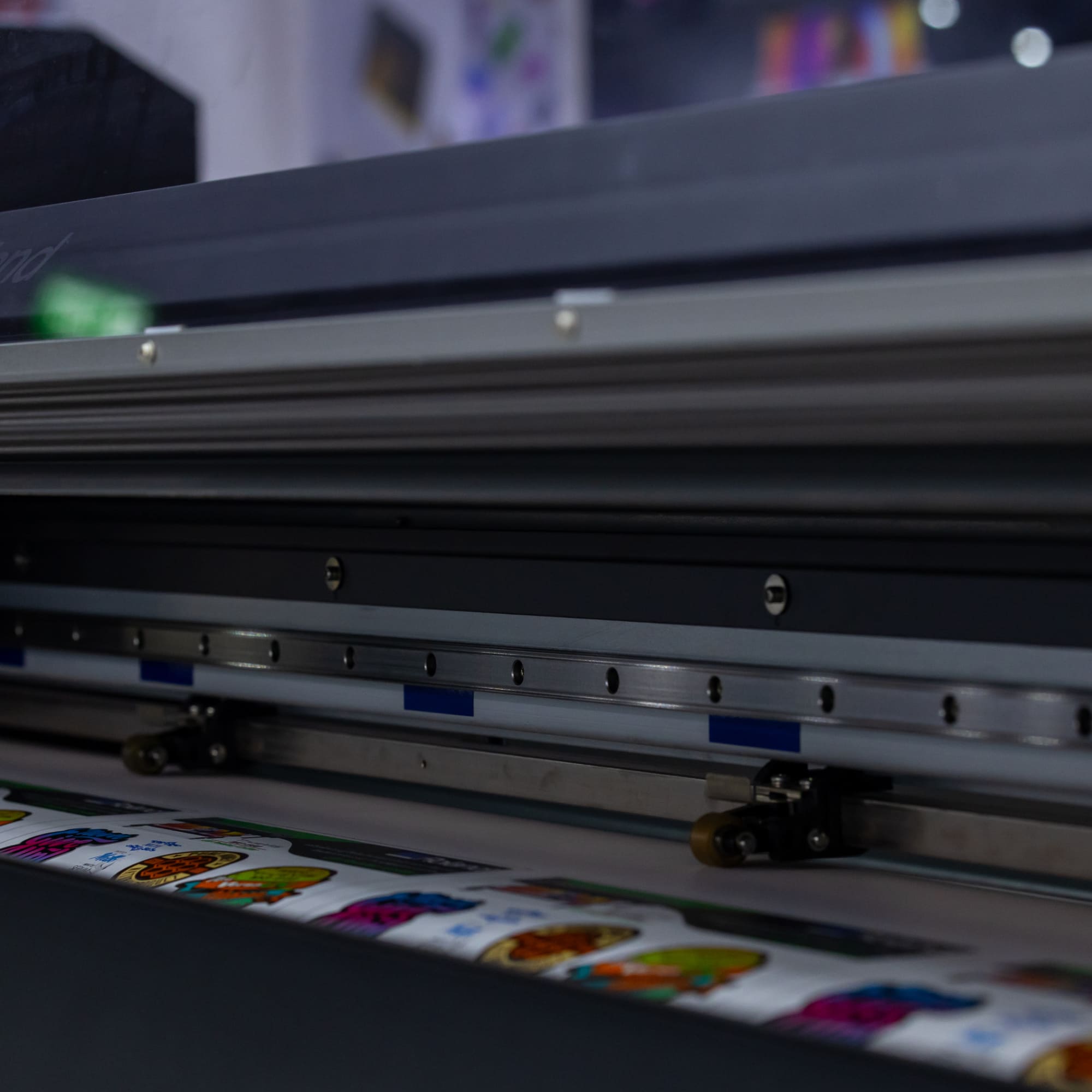
A UV printer lays ink onto the surface the same way any digital printer does, following the design from a file. What is different comes right after: a UV lamp passes over the fresh ink and triggers a chemical reaction, photopolymerisation, that hardens it in seconds. Not minutes. Seconds.
Because the ink cures on contact rather than soaking in, it works on surfaces that would reject a standard ink outright: glass, metal, acrylic, wood, leather, ceramic, rigid plastic. Flatbed printers handle the rigid items. Roll to roll printers handle the flexible ones and the large runs.
Where we use it
Metal and glass drinkware. Acrylic awards and signage. Wooden products, phone cases, USB drives, keychains, rigid packaging. Anywhere a hard, nonporous surface needs a direct print and a label or transfer is not the answer.
It also covers banners, displays, and exhibition graphics at large format, though most of what we print this way sits on the smaller, harder surface: the bottle, not the trade show wall.
What it costs to get wrong
The equipment is expensive, and that shows up fastest on small quantities: a short run costs more per unit than the same short run in screen print. Curved or very flexible surfaces can defeat a flatbed printer entirely. Specialist machines exist for some of them, but not all. And some plastics and coated materials will not take the cured ink without a primer first.
We test adhesion before we commit to a production run. Not because it usually fails. Because when it does, it fails on the client's stock, not ours.
When we choose it
UV printing earns its place on hard goods: metal bottles, glass, wood, acrylic, anything where a full colour print sits directly on a rigid surface and the finish is part of what the client is paying for. For fabric and textile work, another method will serve the client better. We do not force one technique to cover every job. That is not the point of having nine of them.
Our corner of it
Instant cure, hard surfaces, no primer unless the material demands one, adhesion tested before the run goes out. That is our corner of the business. And the question underneath it: whether a print job needs a label, or a technique that turns the surface itself into the mark.
About the author
Chunky Knit Beanie with Patch
America Touch Sunglasses with Mirrored Lens
Stedman Classic Polo Women