PVC in merchandise: what it's actually good for
Bring your brand to life
Explore over 1,000 customisable products designed to showcase your brand and leave a good impression.
What people think PVC is for, and what it's really for
Ask someone why a keyring is made from soft PVC and most of them say something about cost. That's true, but it is not the reason we reach for it. We use PVC because a custom shape holds its detail in soft PVC, molded, colored, cast, in a way few other materials pull off at the price point. Cost is the reason it stays affordable. Detail retention is the reason it gets chosen at all.
One polymer, two behaviors
PVC starts as a resin. Add plasticizers and it goes soft. Leave them out and it stays rigid. Add stabilizers so it does not degrade under heat or UV. Add pigment for color. The base material barely changes; the formulation does the work.
That means the same starting point can end up as a stiff document wallet or a rubber-soft branded figure, depending on what gets mixed in before it is shaped. We tell suppliers what the product needs to survive, and the formulation follows from that.
Where it shows up on an order
Keyrings, lanyards, badge holders, luggage tags, inflatables, promotional figures. Soft PVC molds cleanly into custom shapes, which is why almost every 3D branded figure a client asks for comes back in this material. Waterproof bag coatings, clear document wallets, protective packaging carry it too, in the rigid or semi-rigid version.
If a client wants a shaped mascot with fine detail and consistent color across a production run, PVC is usually the answer before we even get to price.
What it costs to ignore the environmental profile
This is the part we do not skip past. Chlorine-based production generates toxic byproducts. Older phthalate-based plasticizers have been restricted in several markets for health and environmental reasons. PVC does not biodegrade, and it does not recycle cleanly alongside other plastics.
For a client with a visible sustainability position, that is not a footnote to mention once and move past. It is a reason to ask, before the order goes in, whether PVC is actually the right call for this product.
Where we push back, and where we don't
For molded keyrings, lanyards, and similar small shaped items, we have not found an alternative that matches PVC on cost, moldability, and color fidelity at the same time. So we use it, and we say so.
Where substitution is realistic, TPU or silicone get the same job done with a cleaner environmental story. Which route we recommend usually comes down to one question: how much of the client's brand position depends on the material choice, and how much does the product's job depend on it.
Rigid or flexible, molded or coated, disposable or defensible. That is the shape of the PVC conversation. And the question underneath it: is this product chosen because PVC is the only thing that works, or because nobody asked the question yet.
About the author
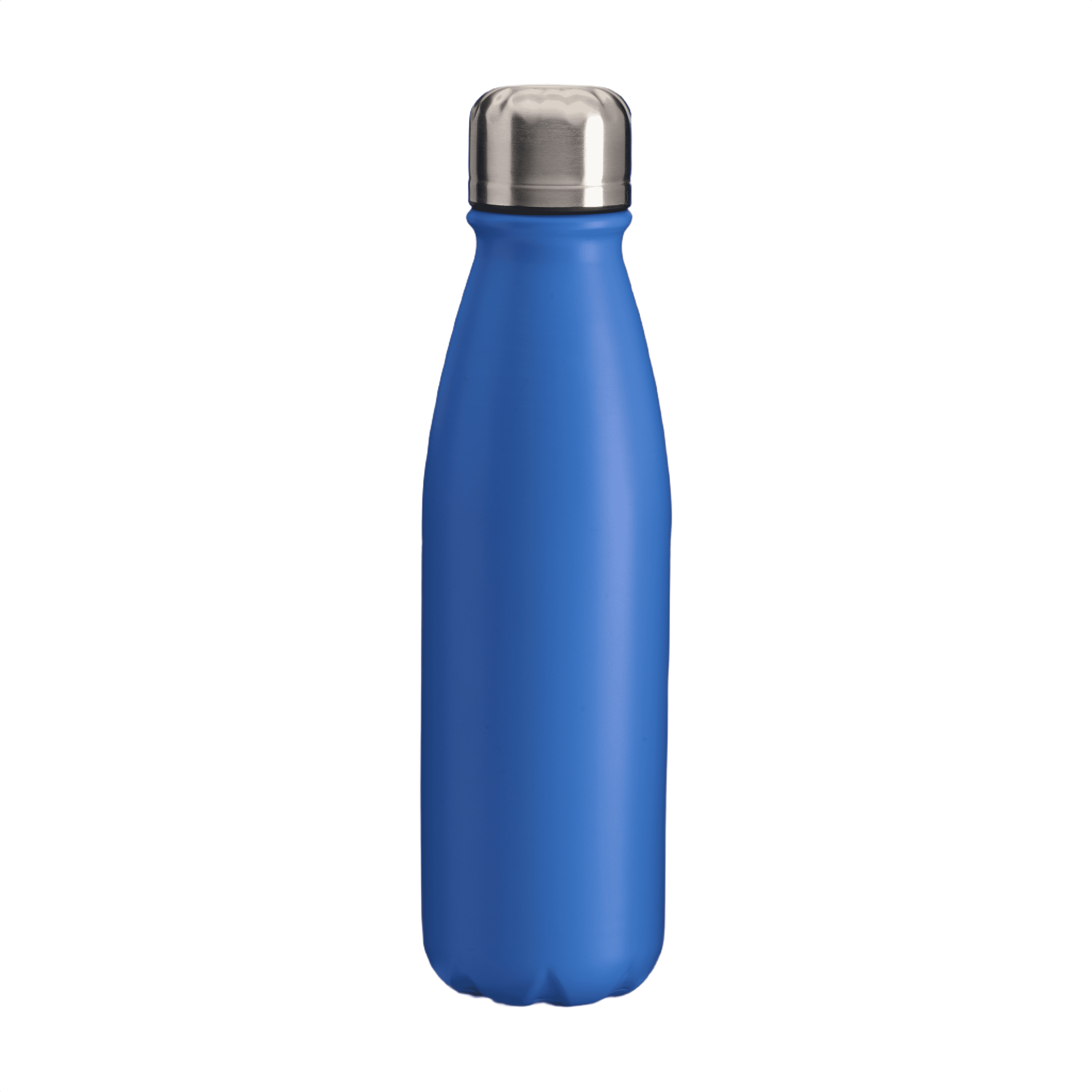
Aluminium Sports Bottle 500ml
Chan Double Wall Bottle 500ml
Yide Lockable Bottle 600ml