PET: the plastic that became a material

Bring your brand to life
Explore over 1,000 customisable products designed to showcase your brand and leave a good impression.
Ask what happens to a PET bottle once it goes in the recycling bin, and the common answer is: it becomes another bottle. Sometimes it does. More often it becomes something else entirely, a bag, a t-shirt, a fleece jacket. PET is one of the few plastics with recycling infrastructure solid enough to make that a normal outcome, not a marketing claim. That is what separates it from most plastic on a merchandise list.
When we spec a product in PET, whether that is a water bottle or a tote lined with rPET fiber, we are making a decision about where in that material's life the product sits: first use, or second.
From bottle to fiber
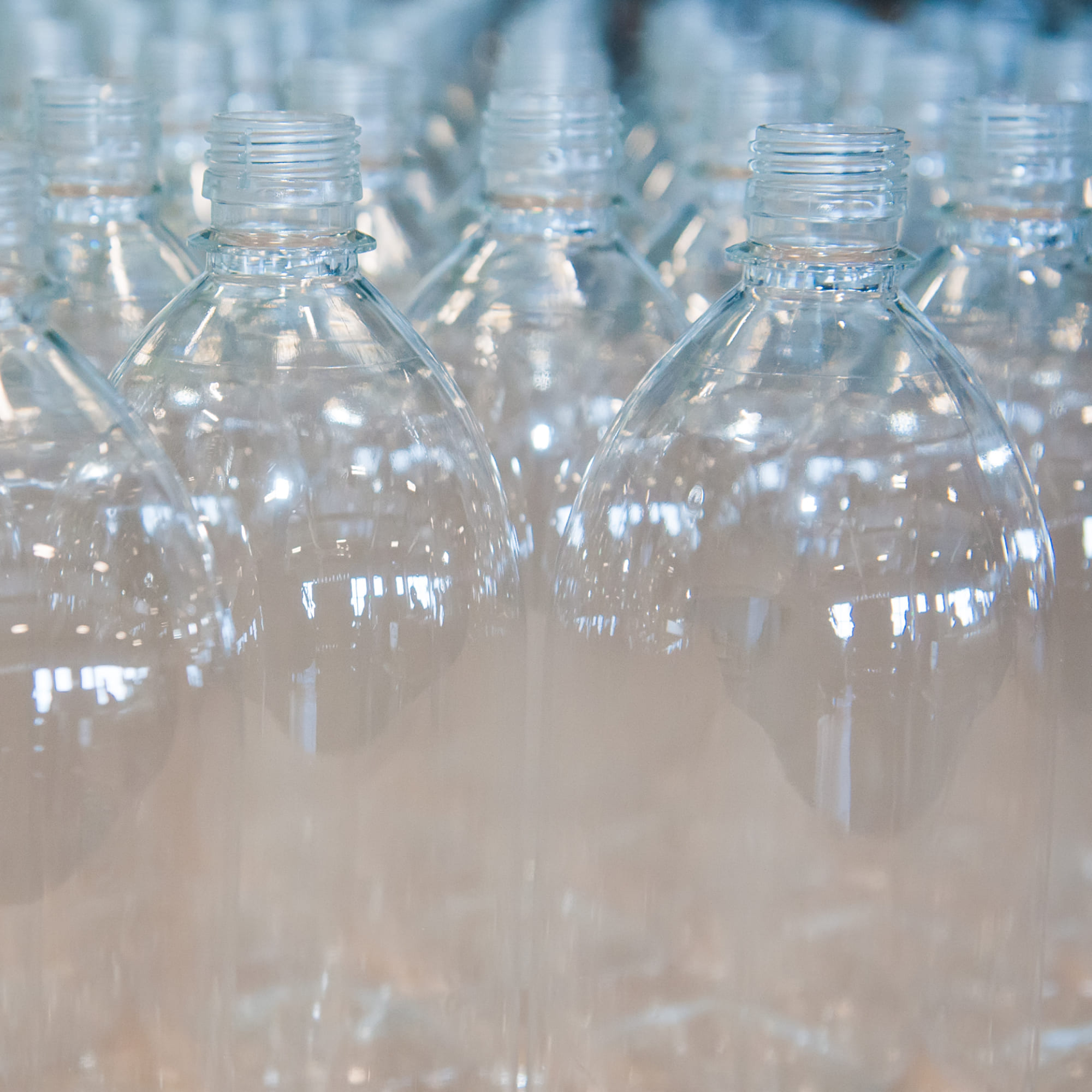
PET starts as ethylene glycol and terephthalic acid, combined into a polymer, the same base chemistry as polyester. Blown or molded, it becomes a bottle. Melted and cleaned, it becomes flake. Spun, it becomes fiber. The bottle collected outside a supermarket becomes the fiber inside a tote bag with no chemical rebuild required. Just processing.
Not every bottle makes that journey. Collection rates vary by market, and flake quality depends on how well the waste stream was sorted before it reached a processor. A contaminated batch gets remelted for a lower grade use, not spun into apparel-grade fiber. That is the part recycling diagrams tend to skip.
Where it shows up on a branded product
Rigid PET turns up as drinkware, clear packaging, and display cases where the product inside needs to be seen before it is opened. Recycled PET fiber turns up in apparel, bags, and the polyester component of blended fabrics. We spec both routes for clients depending on the product: a tote in rPET reads as sustainable and feels like cotton. A display box in PET reads as premium and feels like nothing, which is the point.
Clear packaging is also the easiest place to lose the argument. A PET display box protects a product for one unboxing and then usually goes in the bin, recycling infrastructure or not. We use it where visibility earns its keep and skip it where a printed sleeve would do the same job with less material.
What recycled content actually changes
Recycled PET costs less energy to produce than virgin material and depends less on new fossil feedstock. In most non-food applications the physical properties hold up the same: the fiber spins the same, the bottle blows the same. Food-contact regulations in some markets restrict recycled content in direct food packaging, which is why a recycled water bottle for an event is a straightforward choice and a recycled container for food service sometimes is not.
None of that makes recycled PET a downgrade dressed up as a virtue. It also does not make it a free pass. "Recycled" on a spec sheet answers one question, not every question a client should be asking about a product.
Where virgin still wins
Sometimes we spec virgin PET anyway. Certain color consistency requirements. Certain clarity requirements for premium packaging. Certain markets where recycled-grade supply is inconsistent. Recommending virgin material to a client who came in asking for recycled is not a comfortable conversation, but it is a more honest one than defaulting to recycled because the word photographs well on a product page.
Bottle, flake, fiber, box. That is PET's corner of the material list. And the question underneath it: whether the plastic on the table already had a first life, and whether the one you are about to spec will get a second.
About the author

Oregon Carabiner Water Bottle 750ml
Water Bottle Kick 700ml
TriDri® Vacuum Sports Water Bottle