Softshell isn't a compromise. It's a spec you can't see from outside

Bring your brand to life
Explore over 1,000 customisable products designed to showcase your brand and leave a good impression.
What people assume, and what actually decides the outcome
Softshell gets chosen as the safe middle ground: not as warm as fleece, not as waterproof as a hardshell, good enough for most days in between. That's true as a category description, but it hides the actual decision. Two softshell jackets can sit in exactly that middle position and perform completely differently, because the gap isn't between softshell and its neighbours. It's between a well-specified softshell and a poorly specified one, and that difference doesn't show up in a photo.
How the construction actually works
Softshell isn't one material, it's two or three layers bonded together: an outer face fabric, usually polyester or nylon with a DWR finish, and an inner layer for warmth or moisture management. Bonding fuses the layers without stitching, which is what keeps the surface smooth and the bulk down. The stretch that makes softshell easy to move in comes from the weave structure or from elastane woven into the outer layer, and none of that is visible until someone's actually wearing the jacket in the rain.
Where it earns its place in a merchandise programme
Softshell jackets sit among the most consistently requested outerwear items we handle, especially for corporate programmes, team uniforms, and outdoor-adjacent gifting. They read as professional rather than technical, which is exactly why they get worn daily instead of sitting in a wardrobe for one specific occasion. Embroidery sits cleanly on the outer face, and the structured silhouette holds a logo the way a looser jacket often doesn't.
What the spec actually decides
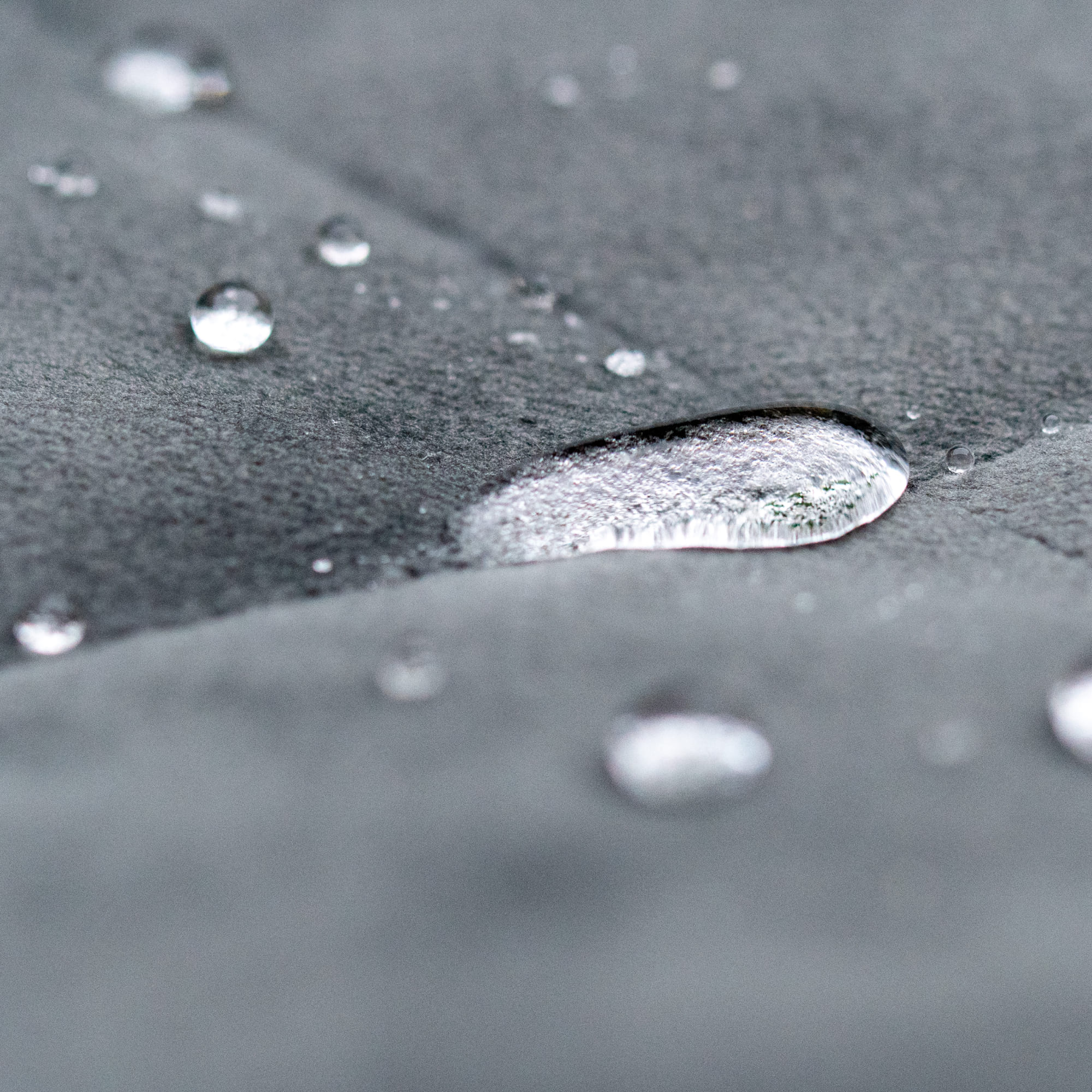
Water resistance rating, stretch percentage, and bonding quality decide whether a softshell holds up, and none of them are visible from the outside. A low-spec version loses its DWR finish within a handful of washes and starts to feel clammy the first time it's actually rained on, which is precisely the condition the jacket was bought for. Mid-to-upper spec is the more defensible choice in this category specifically, because a softshell that fails in the rain is a harder complaint to recover from than a simpler jacket that never promised weather resistance in the first place.
What's shifting on the sustainability side
Recycled polyester and nylon are both available in softshell constructions now, without a real trade-off in how the jacket performs. The DWR finish is the more interesting shift: it's historically relied on PFAS chemicals, and fluorine-free alternatives are increasingly standard rather than a specialty request. Neither change costs the jacket its function at this point, and both make it easier to put a name behind. For a category that's already meant to last, getting these choices right from the start matters more than in a product that was only ever going to be worn once.
The corner of the business this is
Bonded layers, DWR quality, stretch percentage, fluorine-free finish. That's our corner of the material side of the business. And the question underneath it: does the spec sheet match what happens the first time it actually rains, or only what the label promised.
About the author
Block Colour Swim Shorts
Camo Snapback Trucker
Stedman Classic-T Unisex