Denim tote bags: more than just fabric
Bring your brand to life
Explore over 1,000 customisable products designed to showcase your brand and leave a good impression.
The fabric is the easy part
Most people assume the hard part of a denim product is the fabric. It isn't. Good denim is easy to find at a decent grade. The hard part is what happens after: how the mark goes on without cracking, and whether anyone can tell you where the water went.
A denim order splits into two decisions before it ever reaches a client: sourcing and decoration. We treat them as two, not one. A client who gets the fabric right and the print wrong still ends up with a bag nobody carries twice.
A fabric that started as workwear, not merchandise
Denim was developed in Nimes, France, in the 18th century. Serge de Nimes, shortened over time. It reached the United States during the Gold Rush, where miners needed a fabric that would survive daily abuse, and the twill held up where plain cotton did not. Nothing about that has changed. The stiffness when new, the softening with wear, the way indigo fades unevenly: none of it is decoration. It is what happens when a fabric is built to be used hard, and then actually is.
Why the weave matters more than the color
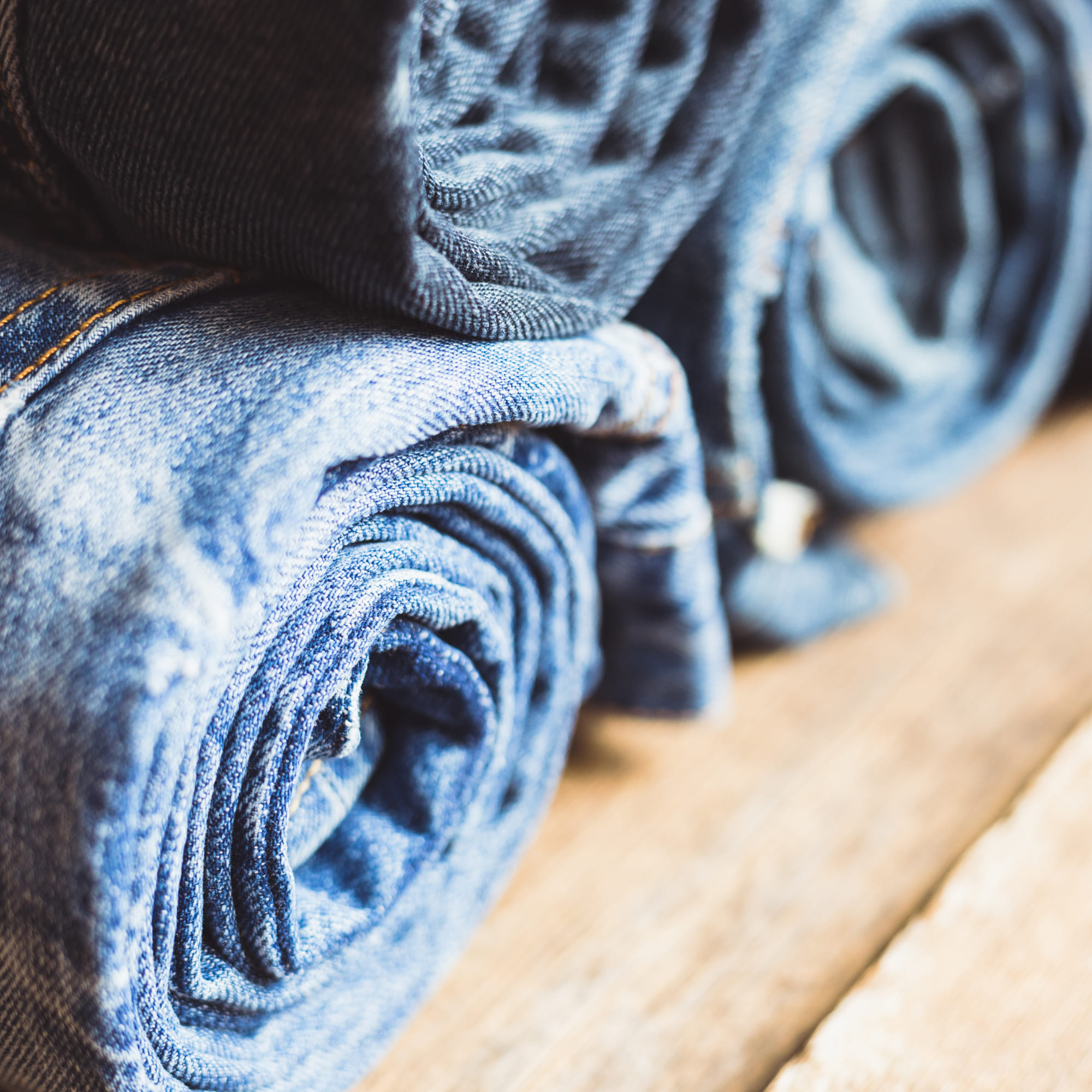
Denim's twill weave sends the weft thread under two or more warp threads instead of one, the way a plain weave would. That diagonal path is what gives denim its texture and most of its strength. Indigo dye only penetrates the outer layer of each yarn, so as the surface wears down, lighter thread shows through underneath. It is one of the only fabrics that records its own use on the surface.
Sourcing it without pretending
Conventional denim production uses a lot of water and a lot of dye chemistry. Indigo has been one of the more scrutinized parts of textile manufacturing for exactly that reason. Organic cotton denim and low-water dyeing processes exist, and we can source them through the same network we use for custom development. But they are not the default. A client has to ask for them, and pay the difference, because a mill running a closed-loop dye process isn't competing on price with one that isn't.
Putting a mark on a fabric that resists most of them
Screen print, our default for most decoration work, is not the first choice on denim. The surface texture from the twill weave means ink sits unevenly and cracks faster than it does on a flat cotton weave, especially at fold lines. What holds up instead: embroidery, which sits into the weave rather than on top of it, and woven or sewn labels, stitched rather than printed. If the product has metal hardware, a zip pull or a rivet, engraving there does more for brand presence than any print on the fabric itself.
Where it earns its place in a catalogue
Denim shows up most naturally in bags, totes, pouches, and small accessories, categories where weight and texture read as quality in a way a lighter cotton can't fake. It suits brands in creative, lifestyle, and fashion-adjacent spaces, where the material does some of the talking before the logo does. It is a poor fit for anything that needs to be light, packable, or cheap at volume. We say so when a client asks for it in the wrong category.
The sustainability argument that doesn't need a certificate
Well-made denim lasts, and that is the strongest environmental claim it has. Stronger than any certification we could attach to it. A denim bag that survives years of daily use replaces nothing during that time. A cheaper alternative discarded after one season replaces itself several times over before the denim needs replacing once. Durability is the sustainability case here. Everything else is a bonus.
Weave, sourcing, decoration, fit, restraint. That is our corner of the business. And the question underneath it: whether a product still looks considered after the hundredth wash, or only in the product photo.
About the author
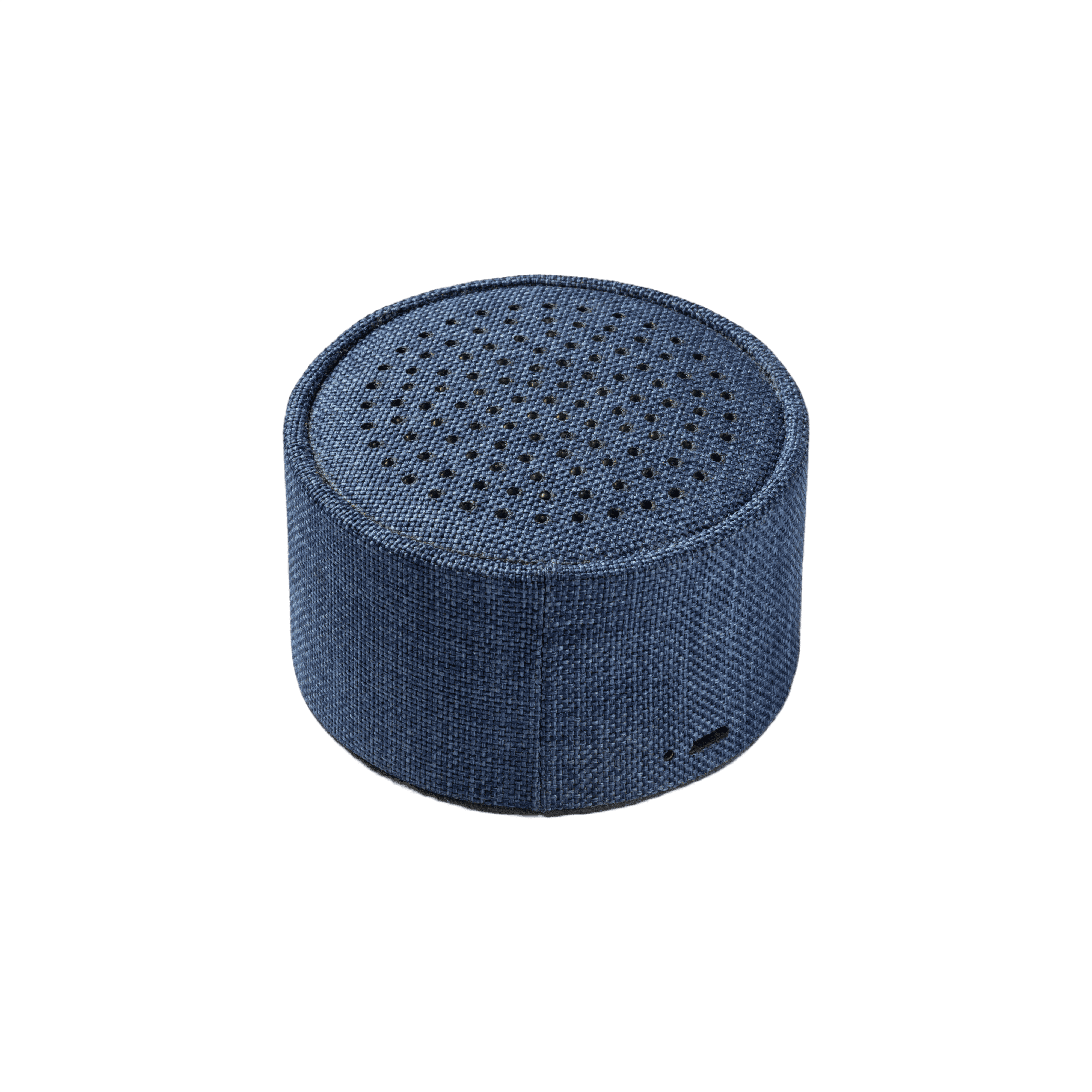
R-PET Bluetooth Speaker v5.0
X-Smart Lens Cleaner
EasyCharge Extended-L 4in1 - X-Smart